


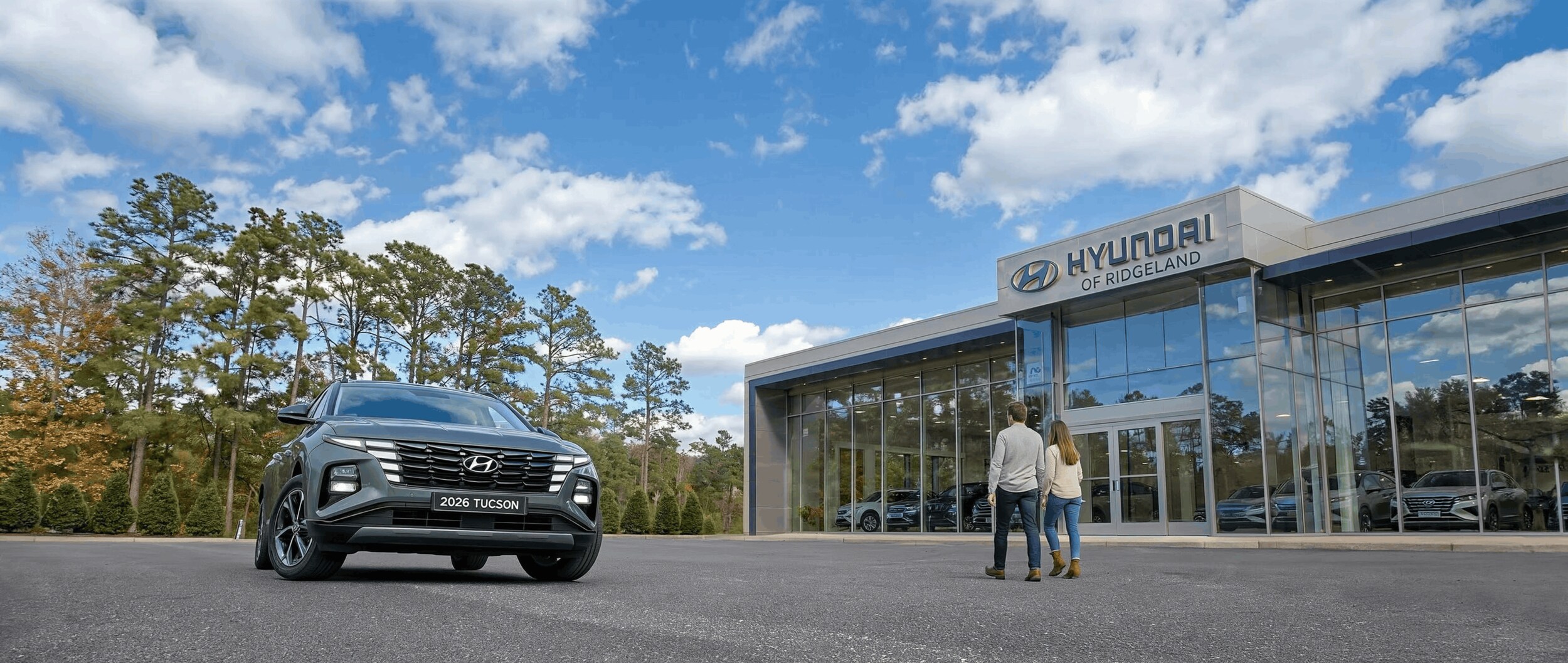
What's the one step that changes everything before a test drive? Decide which trim level you want to drive before you walk in, and you'll spend the visit on the car. It's easy to fixate on a model and still end up behind the wheel of the wrong configuration. The trim decision is only step one, though. A well-prepared 30-minute test drive at our Ridgeland lot will tell you more about a Hyundai than an afternoon of browsing spec sheets, but only if you set it up right.
We'd prep the same way for our own family. The Tucson fits the north-metro commute well, so it leads the table, but every step below applies to anything on our lot.
The 7-Step Preparation Ranking
| Rank | Step | Best for | What it surfaces |
|---|---|---|---|
| 1 | Decide the trim before you arrive | Every buyer | Whether you're testing the actual tech you'd own |
| 2 | Know your real route in advance | Commuters on I-55 | Highway Driving Assist, acceleration onto the interstate |
| 3 | Bring what usually rides with you | Families, haulers | Real cargo fit, third-row comfort, car-seat access |
| 4 | Check your trade-in value first | Trade-in shoppers | Keeps the numbers conversation separate from the drive |
| 5 | Set a 30-minute minimum | All buyers | Enough time for city, surface streets, and brief highway |
| 6 | Ask about the ADAS demo before leaving the lot | Safety-feature buyers | Blind-spot warning, lane-keep, forward collision |
| 7 | Bring your phone paired and ready | Tech-focused buyers | BlueLink connectivity, wireless charging, Apple CarPlay |
Decide the Trim Before You Pull Out of the Lot
Decide the trim before you drive. The gap between a base and a mid-trim Hyundai isn't cosmetic but functional, and the lineup runs three to five levels on most models, so the one you put on the road needs to be the one you're weighing. The SEL trim on the Tucson, for instance, adds a larger 10.25-inch infotainment display and Hyundai SmartSense safety features that the SE trim simply doesn't carry. Drive the SE and you'll spend the test drive wondering whether the top-screen trim feels like this, and you'll have learned almost nothing useful.
Call us or browse our new inventory before you arrive and tell us exactly which trim you want on the lot. Doing that up front saves the most time and gives you the cleanest signal. We'll have it pulled and ready.
Plan a Route That Matches How You Actually Drive
Plan a route that mirrors your daily commute. A lap around our parking lot tells you how the Hyundai parks and almost nothing about how it drives, and the I-55 corridor is the stretch that matters for Ridgeland and Madison buyers heading north each morning. Ask us to route the drive toward a brief on-ramp and a few miles of open highway. That stretch is where Highway Driving Assist (available on higher trims) earns its keep, with adaptive cruise that holds a following gap, lane-centering that works in real traffic, and smooth regen braking on deceleration.
Our standard 20-minute loop skips the interstate. Ask for it specifically, and we'll build the route around what you need to evaluate.
A word of caution: Don't use the test drive to evaluate things you can verify on a spec sheet before you arrive. Horsepower figures, cargo cubic footage, and towing capacity are published numbers. Use the drive to test what a spec sheet can't tell you. Notice how the steering weights up at highway speed, how clearly you see out of the rear pillars, and how the cabin sounds at 70 mph on a rough surface.
The IONIQ 5 is a good example of this principle. Its 800V architecture and ultra-fast charging capability are facts on a page. What you can't read is how the single-pedal regen tuning feels in stop-and-go, or how quiet the cabin is at speed. The test drive is where you learn those.
Bring What Actually Rides With You
Bring the gear and the people who ride with you. A Hyundai that looks right on paper can still come up short with a child seat, a golf bag, or a third-row passenger aboard, and that's the kind of thing you only learn in person. Bring a child safety seat if you use one. If you regularly carry a golf bag, say so and we'll pop the hatch. And if you're considering the Palisade because your family fills seven seats on weekend runs, bring at least one adult who would sit in the third row, since third-row comfort isn't something you can assess from the driver's seat.
The third row in the Palisade offers 32.2 inches of legroom in its standard configuration, which is real usable space for an adult on a short run and tighter on anything over 90 minutes.
That number means something different depending on who sits back there. The third row gets tight past an hour and a half. We'd rather you know before you decide than figure it out on a drive to Canton.
Value Your Trade-In Before the Visit, Not After
Get your trade-in value before the visit. Knowing the number ahead of time keeps the test drive focused on the vehicle and keeps a pricing conversation from creeping into the drive while you're trying to feel out the steering. When you don't know it, the numbers talk tends to drift into the drive itself, and you wind up evaluating a purchase decision when you should be evaluating steering feel.
Value Your Trade-In Before You Visit
A few minutes is all it takes, and it separates the two conversations cleanly. We think the test drive is better for it.
Give Yourself at Least 30 Minutes
Give yourself at least 30 minutes, because 20 minutes gets you around the block while 30 gets you a surface street, a right-hand merge onto the interstate, and a moment to sit still at a light and feel whether the cabin is quiet. You notice the seat bolsters, the A-pillar view, the air vent direction at face height. That pause at a red light matters.
We don't rush test drives. If you need 45 minutes, say so.
Ask for the ADAS Demonstration Before You Leave the Parking Lot
Ask for the ADAS demonstration before you leave the lot, because Hyundai's SmartSense suite comes standard on most trims in the current lineup, and what forward collision warning actually feels like is far easier to grasp at low speed with a team member talking you through it than out in traffic. You'll want to know how hard the lane-keeping assist nudges and how the blind-spot warning shows up in the mirror cluster. Ask us to walk through it in the lot before you leave. The five minutes you spend there saves a lot of guessing on the road about whether that chime was the system or the navigation.
Pair Your Phone Before You Leave the Driveway
Pair your phone before you pull out of the driveway, because BlueLink-equipped vehicles plus Apple CarPlay and Android Auto connectivity are standard or available across the lineup, and nothing eats a test drive faster than fumbling with Bluetooth in a moving car. Do it in the parking spot. Take the first three minutes to get your phone connected, your music on, and one navigation route loaded. Then, when you're actually driving, you're evaluating the display response, the steering wheel controls, and whether the voice commands feel natural or clunky.
That changes what the drive teaches you.
Categories:
Social


