


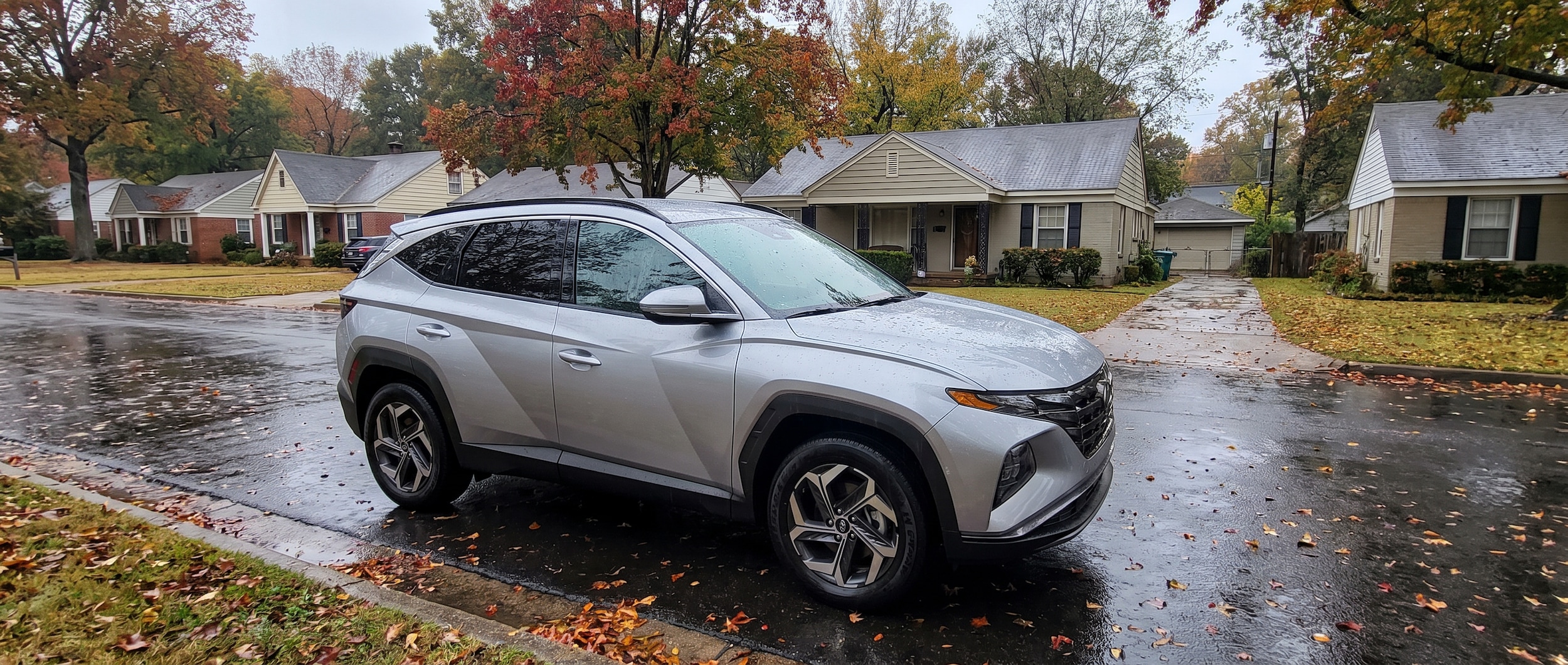
October in Ridgeland isn't winter, and it isn't dry either. The afternoon thunderstorms haven't fully wound down, the I-55 commute still throws standing water at you without much warning, and one catch most prep guides skip is that a Mississippi summer bakes wiper rubber and bleeds tire pressure faster than the national averages suggest. Your Hyundai probably needs more attention right now than the generic six-month service reminder implies, and the real question isn't whether to prep. The question is which of the three areas matters most for your situation.
We watch this play out every fall in our service lane. Someone's wipers smear on a rainy Tuesday, and a tread check turns up tires that are technically legal yet well below the point where wet stopping distance starts climbing sharply. The straight answer is that all three areas connect. Tires set the floor, wipers give you the information, and Hyundai's built-in safety systems do their best work only when the first two are handled. We've laid them out side by side below so you can prioritize without guessing.
The short version
- Tires first: if tread is below 4/32 inches (not the legal 2/32 minimum), wet stopping distance increases substantially, and that's the threshold to act on before the rains pick up.
- Wipers second: Mississippi's summer UV and heat degrade rubber faster than the national 6-12 month recommendation; October is exactly when summer-baked blades fail their first real test.
- Safety tech third: Hyundai SmartSense systems like ABS and Electronic Stability Control work regardless of conditions, but camera-based features (Lane Keeping Assist, Forward Collision-Avoidance) work better when your windshield is clean and your tires actually have grip.
- The honest trade-off: AWD trims handle wet acceleration better, but traction control and AWD don't shorten your stopping distance. Tires do.
- Best first step: a quick tread-depth check and a wiper test before the next rain, not after it.
the Hyundai Tucson is one of the models we'll lean on throughout, because it shows the decision points clearly across the trim ladder. But everything here applies to your Elantra, Santa Fe, Palisade, or whatever's sitting in your driveway.
How Do Tires, Wipers, and Safety Tech Actually Compare for Wet Fall Driving?
All three matter, but they don't share the same deadline, so the table below scores each prep area on urgency, on the exact failure mode you get if you skip it, on whether your Hyundai gives you built-in help, and on which driver it matters most for. Read down the rows, then across the columns.
| Prep Area | Urgency This Month | What Goes Wrong If You Skip It | Hyundai-Specific Angle | Best For |
|---|---|---|---|---|
| Tires (tread + pressure) | High | Stopping distance climbs at 4/32" tread; hydroplaning risk rises sharply below that | TPMS warns on pressure loss; tread is a visual check only | Anyone with 2+ years on current tires or 25,000+ miles |
| Wiper Blades | High | Smearing and streaking reduce visibility in the first 30 seconds of a downpour | Rain-sensing AUTO mode on upper trims; wiper service mode required before changing blades | Any Hyundai that survived a Mississippi summer without a blade swap |
| Visibility and Safety Systems | Medium (ongoing) | Camera/radar-dependent features degrade when the windshield is filmed with road grime | SmartSense standard on all 2026 trims; ABS and ESC always active, camera features need a clean lens | Drivers who rely on Lane Keeping Assist and Forward Collision-Avoidance on their I-55 commute |
None of these is a dramatic emergency on its own. Together, though, they describe a vehicle that's either ready for the rain or working against you during it.
Why Does Tread Depth Matter More Than the Legal Minimum in the Rain?
Tread depth matters more than the legal minimum because 2/32 inches only marks where Mississippi considers a tire worn out, and real wet grip starts dropping off much earlier, closer to 4/32 inches, the number worth acting on before the rains pick up. The legal number and the safe number aren't the same.
The Hyundai Santa Fe and most of the Hyundai lineup ship from the factory with 9-10/32 inches of tread. Once tread grooves lose depth, they channel less water per second away from the contact patch between your tire and the road. Testing data shows that 11/32 inches of tread produces an average wet stopping distance of 160 feet, which climbs to 195 feet at 5/32 inches and 205 feet at 4/32 inches. None of that is a minor variance on a wet I-55 ramp.
Independent testing puts the real-world stakes in concrete numbers.
- Consumer Reports found that tires worn to 4/32 inches require about 30 additional feet to stop on wet pavement compared to new tires.
- AAA's higher-speed testing at 60 mph found 4/32-inch tires needing 87 extra feet, a 43 percent increase in stopping distance.
Grab a quarter and run a quick check right now. Slide it into a tread groove with Washington's head pointing down. If you can still see the top of his head, you're below 4/32 inches, and that's your swap window. The penny test (Lincoln's head fully visible) tells you when you've hit the legal 2/32 limit, which is well past where we'd want anyone driving in rain.
Tire pressure matters right alongside tread depth. Underinflated tires spread their contact patch outward in a way that keeps the tread from gripping the road properly, which makes them more likely to ride up on a film of water than cut through it. Your Hyundai's Tire Pressure Monitoring System (TPMS) will light up if pressure drops a lot, but it's calibrated as a warning light, not a precision gauge. Check the door jamb sticker and top off the air before the rain arrives.
The Tucson Hybrid and other Hyundai hybrids carry a slightly heavier curb weight from the battery pack, which puts a bit more load on the tire contact patches. Proper inflation only matters more for those trims.
The practical wet-weather threshold isn't the legal 2/32-inch tread minimum. It's 4/32 inches, where stopping distance on wet pavement starts climbing fast enough to matter in a real-world stop.
Do Wiper Blades Really Wear Out Faster After a Mississippi Summer?
They really do wear out faster here, and the cause is rubber chemistry rather than any sales pitch, because a long Mississippi summer of UV and parked-car heat dries and warps blade rubber well before the national six-to-twelve month window would flag it. The calendar undersells how fast our summer ages a blade.
In regions with long, hot stretches of sun, UV exposure can dry out and warp the rubber blades on windshield wipers, rendering them ineffective before the six-to-twelve month general recommendation would suggest. Ridgeland's summers run hot and humid from May well into September. Autumn brings a more moderate climate, with temperatures gradually dropping from the upper 80s in September toward the mid-60s by November. So the first serious October rain is often the first real test your wiper blades have faced after a full summer of UV damage and parked-car heat.
What happens when wipers fail:
- Smearing (the blade pushes water sideways rather than lifting it)
- Streaking (a horizontal band of uncleared glass)
- Chattering (a rhythmic skipping motion)
Any of those during a heavy downpour means you're flying partially blind.
We flag one thing specifically for 2026 Hyundai owners. Most late-model Hyundais, including the Tucson, Palisade, Kona, and Sonata, park their wiper arms below the hood line. Lifting the arms manually in that resting position can damage the hood or the wiper motor linkage, so you must put them into Service Mode first. To activate Service Mode, turn the ignition off and then, within 10-20 seconds, push the wiper control stalk and hold it for two to three seconds. The arms will rise to a mid-windshield position where they're safe to work with. Our service team can handle this as part of a standard blade replacement if you'd rather not do it yourself.
On upper trims, the 2026 Santa Fe's AUTO wiper mode uses a rain sensor on the windshield to adjust wipe speed automatically as rainfall intensity changes. The rain sensor reads how much rain is sitting on the glass and sets the wiping interval. The harder it rains, the faster the wiper runs, and when the rain stops, the wiper stops. With fresh blades, that system works beautifully. With summer-degraded rubber, it's just adjusting the speed at which the blade smears water across your field of view.
Team note: Silicone wiper blades outlast standard rubber blades in hot climates because silicone resists UV damage and heat significantly better than natural rubber. If you're replacing blades this fall and you're tired of doing it twice a year, silicone is worth the upgrade. Ask our service team which size fits your specific model, because the 2026 Santa Fe (26-inch driver, 18-inch passenger) is different from the Tucson or Elantra.
Choosing Your Prep Focus by How You Drive and What You Drive
You don't have to tackle all three at once, though you do want to start with whichever one is furthest gone, so match the order below to how you actually drive and to what's parked in your driveway rather than running down a generic checklist. A little triage beats doing everything blind.
Your tires are over two years old or past 25,000 miles. Start there. Tread wears at different rates depending on driving style, alignment, and rotation habits. If you haven't had a tread-depth check recently, make that the first call. Everything else in this guide gets more effective once the tires are right.
Your Hyundai made it through last summer without a wiper change. Pull the blades gently away from the windshield and run a finger along the rubber edge. Brittle, cracked, or notched rubber confirms they didn't survive summer intact. You'll feel it before the next rain shows you.
You commute on I-55 between Ridgeland and Jackson. The I-55 corridor through the Madison County area deals with the same afternoon storm cells that push up from the Gulf well into October. Ridgeland averages about 8.5 rainy days in October, lower than spring, but the storms that do arrive tend to drop their moisture quickly. Rain like that is where lane-departure warnings and forward collision alerts get tested in real conditions. Hyundai SmartSense ships as standard across every trim on the 2026 Tucson, and the always-active systems, ABS and Electronic Stability Control, form the rain-day foundation regardless of sensor visibility.
You recently moved up to a Hyundai with AWD. There's good news and a caveat here. AWD trims like the Tucson AWD and Santa Fe AWD distribute power to the wheels with traction, which helps in wet acceleration and cornering. The caveat is that AWD doesn't change stopping distance. Many drivers believe that all-wheel drive systems provide a margin of safety that can lead to overconfidence on wet roads. Your stopping distance on wet pavement is determined by your tires. AWD doesn't override that.
Book your fall service visit online
Frequently Asked Questions
Does AWD make my Hyundai significantly safer in the rain?
AWD does improve traction during acceleration and cornering on wet pavement, which is genuinely useful on a slick I-55 on-ramp. It won't, though, reduce your stopping distance. Wet stopping distance comes down to tire tread depth and tire condition. A Hyundai Tucson AWD on worn tires will take longer to stop in the rain than the same vehicle on fresh tread. The prep priority stays the same no matter the drivetrain. Check tires first.
How do I know when my Hyundai wiper blades actually need replacing?
The most reliable test is a wet-windshield check rather than a mileage interval. Run the wipers on a wet window and watch for three failure signs. The blade might smear (push water sideways rather than lift it), streak (leave a band of uncleared glass), or chatter (bounce or skip across the glass). Any one of those means the blade isn't doing its job. In Mississippi's climate, where summer UV and heat degrade rubber faster than in cooler regions, checking the blades each fall before the rains return beats leaning on the calendar alone. If you haven't swapped them since last fall, now's a reasonable time to check.
Categories:
Social


